

Dr. Eric T. Parker
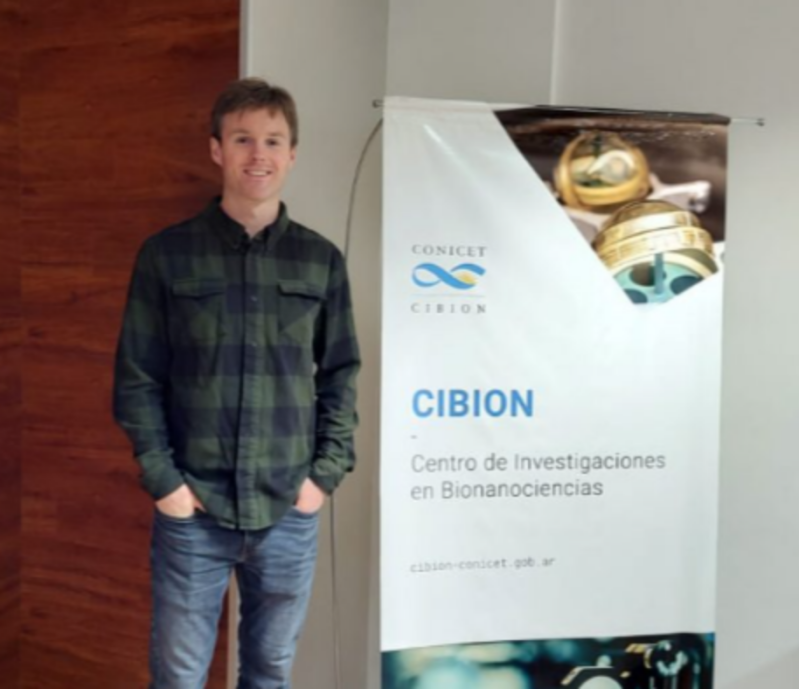
https://cibion.conicet.gov
Introduction
Dr. Parker is an American astrochemist, space scientist, and specialist in analytical cosmochemistry based at NASA's Goddard Space Flight Center. His core research involves astrobiology and the origins of life, specifically identifying chemical biosignatures and organic molecules within extraterrestrial matter.
Academic Background & Fellowships
Dr. Parker's training bridges the gap between environmental chemistry, planetary processes, and analytical instrumentation:
- BS in Environmental Chemistry: Graduated from the University of California, San Diego (UCSD).
- MS in Earth System Science: Earned from the University of California, Irvine (UCI).
- PhD in Chemistry: Completed his doctorate at the Georgia Institute of Technology, where his doctoral research focused heavily on the synthesis and evolution of chemical building blocks under early-Earth, prebiotic conditions.
- Fellowships: Received several high-profile recognitions during his training, including titles as a NASA Planetary Biology Research Fellow and a NASA Astrobiology Institute Nordic Scholar.
Career at NASA
Dr. Parker joined the Astrobiology Analytical Laboratory at NASA's Goddard Space Flight Center in Greenbelt, Maryland.
Extraterrestrial Sample Analysis: He utilizes ultra-performance liquid chromatography and high-resolution mass spectrometry to extract and isolate complex chemical mixtures from pristine planetary samples.
Meteorites and Micrometeorites: His experiments hunt for basic biomolecules—such as amino acids and peptides—trapped inside ancient meteorites and microscopic dust grains.
Asteroid Mission Science: Dr. Parker contributed critical analytical work toward evaluating pristine carbonaceous samples returned directly from the cosmos by major spacecraft missions, including the NASA OSIRIS-REx mission to asteroid Bennu and JAXA's Hayabusa2 mission.
Research & Focus on Prebiotics
His overarching goal is to decipher how the building blocks of life formed in space and whether they were delivered to a young Earth by cosmic impacts. By simulating prebiotic environments in the lab, his research tracks how primitive molecules transition into functional biopolymers. This helps NASA determine the biochemical criteria for "habitability" across the solar system.
Additional Topic Research
Asteroid Sample Return Missions:

Hayabusa2#, Credit: NASA/JAXA/Dan Gallagher