

Introduction
An astronomer, astrophysicist, and prominent science communicator, Mari-Liis Aru specializes in planet formation and the role of star-forming environments. She is currently a postdoctoral researcher at Imperial College London.
Academic Background & Career
Dr. Aru's academic and professional journey spans several premier European space and astronomy institutions:
- BSc in Physics: Completed her undergraduate degree at the University of Tartu in Estonia, where she also gained early experience at the Tartu Observatory and working on the ESTCube project.
- MSc in Space Sciences: Earned from the University of Liège in Belgium, focusing on planetary science and stellar astrophysics.
- European Space Agency (ESA): Worked for two years as a Young Graduate Trainee (YGT) at ESA-ESTEC in the Netherlands.
- PhD in Astronomy: Completed her doctoral studies at the European Southern Observatory (ESO) and LMU Munich in Germany. She made history as the first Estonian citizen to complete a PhD at ESO.
- Postdoctoral Research: Joined Imperial College London to continue her research in astrophysics.

Research Focus
Her research focuses on protoplanetary disks—the dense, rotating rings of gas and dust surrounding newborn stars where planets are born. Specifically, she studies how high ultraviolet (UV) radiation from massive nearby stars influences these environments, a process known as external photoevaporation. .
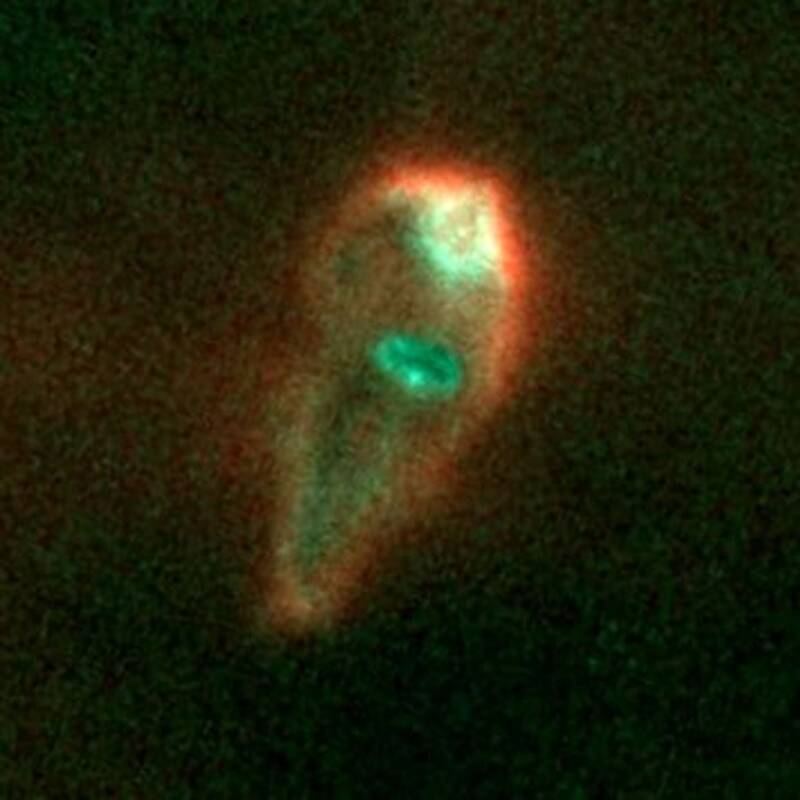
Her work heavily utilizes high-resolution observational data from state-of-the-art instruments like the VLT/MUSE (Very Large Telescope / Multi-Unit Spectroscopic Explorer) to map out young stellar objects and irradiated disks, often called "proplyds," in star-forming regions like the Orion Nebula. .
Science Communication & Outreach
Beyond her academic research, Dr. Aru is an active science communicator dedicated to making astronomy digestible and accessible to the public. Her outreach efforts focus heavily on encouraging girls and first-generation students to pursue STEM paths. Her primary platforms include:
- Instagram & Threads: Under her handle @mari.liis.astro, she posts bite-sized astrophysics explanations and chronicles her day-to-day life in academia.
- Substack Newsletter: She curates Kosmosest, a newsletter written in both English and Estonian that breaks down major space exploration feats, stargazing guides, and complex universe dynamics.
Planet Formation
A proplyd, or ionized protoplanetary disk, is a distinct astronomical object, many of which are found within the Orion Nebula. These proplyds are young star-forming regions where the process of planetary formation is taking place.
The fascinating aspect here lies in the interaction between these protoplanetary disks and the harsh environmental conditions within the nebula. Intense radiation and stellar winds from massive stars play a substantial role in shaping these proplyds, influencing the structure and composition of the disks.
Studying proplyds in such environments helps scientists understand the challenges and complexities that young planetary systems face during their development, shedding light on the spectacular processes of celestial body creation in the cosmos.